
Hazardous Area Sensors
Wilcoxon offers sensors that can be used in a variety of hazardous locations and meet both North American and international standards. A complete list of certifications for hazardous area sensors.
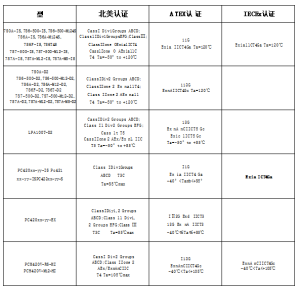
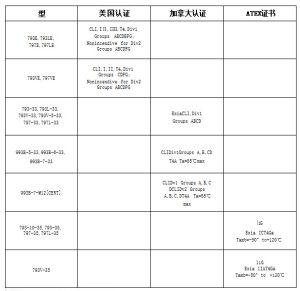

Wilcoxon offers sensors that can be used in a variety of hazardous locations and meet both North American and international standards. A complete list of certifications for hazardous area sensors.
AASCAFS Gas Mass Flow Sensors are made with Micro-Electro-Mechanical Systems (MEMS) flow sensing chips for clean, relatively dry low-flow gas measurements and process control for a variety of applications. Unique packaging technology allows the products to meet different ranges of flow measurements and ensures high sensitivity, high reliability, high stability and low cost. Characteristic: High…
Designed for helicopter condition monitoring, the HA series is a high stability accelerometer utilizing high reliability piezoelectric ceramic elements and low noise processing circuitry to provide either a 20mV/g or 40 mV/g sensitivity acceleration output, or a vibration velocity output. Features include ±5% sensitivity tolerance, top outlet, 3-pin MIL-C-26482 type connector, rugged 316L stainless steel…
The PSC-360 is a rugged, cost-effective, non-contact rotary position sensor for automotive, off-road, marine, medical, and industrial applications without the limitations of a potential meter solution (wear and tear, electrical angle limitations, etc.). In addition, the sensor offers a configurable switching output option, integrated inside the sensor. Characteristic: Open-loop current sensors based on the Hall…
The combination sensor provides separate analog pressure and temperature output signals and is designed for vehicle transportation applications to reduce size and cost. The combination sensor is used for liquid and gas condition monitoring and is suitable for temperatures up to +1350C. Characteristic: Operating Temperature Range: -40℃~135℃A Zone Supply Voltage: 5±0.25VDC Supply current: <10mA Temperature…
The evaporator temperature sensor is used to measure the evaporator core temperature. The evaporator cools the refrigerant in the HVAC system. Since the evaporator core operates at temperatures very close to 0°C, it is important to have an accurate and reliable thermistor to measure its temperature to prevent core freezing. Core freezing can cause expensive…
The Thermoetrics GE-2142 HVAC Duct Temperature Sensors are OEM solutions for measuring air temperature in ventilation ducts. These sensors provide a signal output that is proportional to the duct air temperature. This signal is used as an input to the controller, which parses the signal and adjusts the output accordingly. Characteristic: Operating Temperature Range: -40°C~135°C…